11/12/2026
The New Centres of African Excellence have been selected!

Practical and responsible AI in Kenya
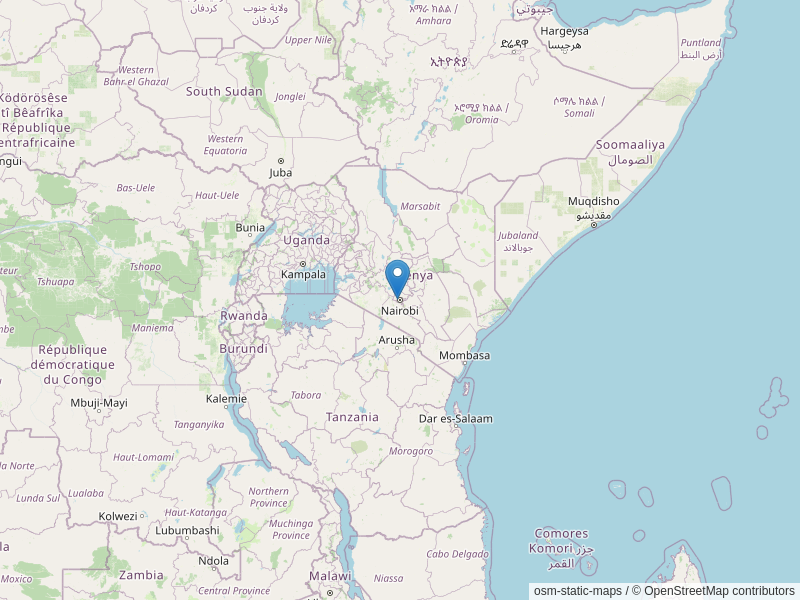
The new centre of excellence, “Applied and Responsible Artificial Intelligence for Society and Environment (ARAISE)”, is being established under the leadership of the Eberhard Karls University of Tübingen and its three Kenyan partner institutions: Dedan Kimathi University of Technology (DeKUT, the centre’s main location), the Kenya Medical Research Institute (KEMRI) and Maseno University. The new centre aims to bring together research, teaching and training in artificial intelligence in Kenya. The country is already one of the leading centres for the development and application of AI on the African continent.
The Centre’s research focuses on the development of practical and responsible AI applications in the fields of the environment and geodata, public health and social inclusion. In addition, the aim is to strengthen academic cooperation between Kenya and Germany and to promote dialogue on the opportunities and risks of AI. Specifically, there are plans to establish German-Kenyan research groups that will carry out projects on, for example, AI-supported health research or the use of AI to improve water supply and climate adaptation. Furthermore, the partner universities are developing joint teaching and training programmes for Master’s students on the responsible use of AI.
Sustainable infrastructure in Ghana
The Technical University of Munich (TUM), together with its Ghanaian partner university, Kwame Nkrumah University of Science and Technology (KNUST), has been selected to establish the second new centre of excellence, the ‘Centre of Excellence for Customary Land Governance and Participatory Planning for Sustainable Infrastructure (LandGAPPS)’.
The work of the new centre focuses on expanding research and training in the fields of customary land governance (traditional land rights), participatory spatial planning, geoinformation systems, land administration and sustainable infrastructure development. German and Ghanaian experts will work at the centre to develop practice-oriented solutions for resilient infrastructure and contribute their scientific findings to the academic discourse in both countries. Plans include, amongst other things, joint curricula, support for doctoral studies, mobility programmes, digital teaching resources and the establishment of a permanent academic infrastructure between TUM and KNUST.
Read the press release here