


10/03/2026
Kenya’s Artificial Intelligence (AI) Framework for Higher Education: From Policy Dialogue to Action
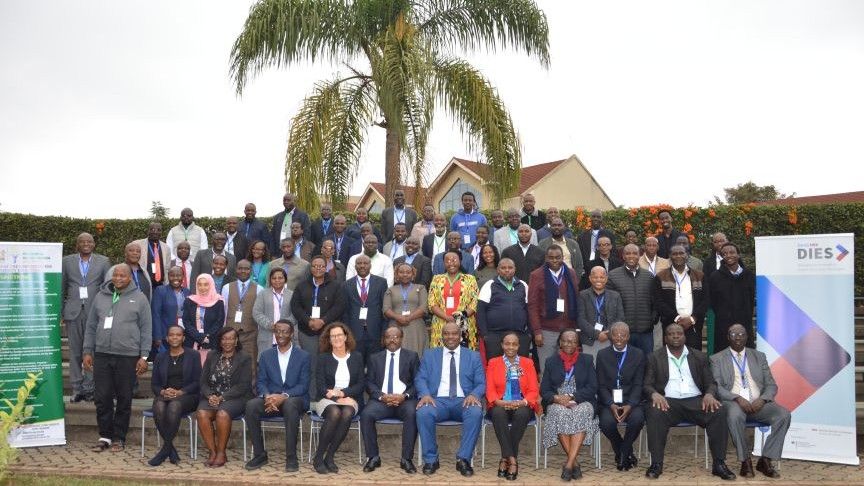
Its overarching purpose was to lay the groundwork for a cohesive, accountable, and context-sensitive national AI framework for Kenya’s higher education sector.
Prof. Mike Kuria, CEO of the Commission for University Education, urged participants to evaluate not only what AI could provide Kenya, but also what the country could lose if it does not engage strategically. He underlined Kenya’s role at the table, emphasizing that they must be involved in the manufacture of AI. In his words: “If you want a piece of the cake, you must be part of the production table.”
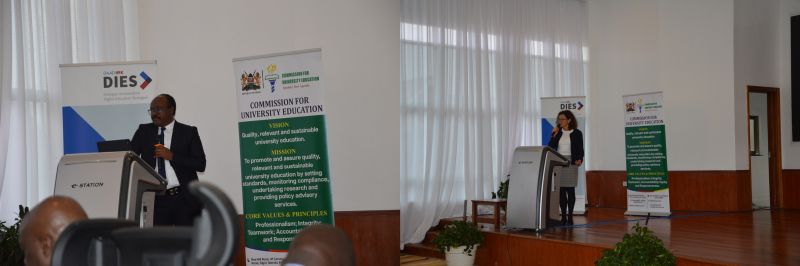
Prof. Mike Kuria (l) and Dr. Dorothee Weyler (r)
From consumer to creative
Prof. Kuria believes that this requires the country to invest in AI production rather than simply purchasing technologies generated elsewhere. Universities must assist drive AI research and innovation, particularly in addressing Kenyan and African challenges.
This purpose is also important to the DAAD’s perspective.
Dr. Dorothee Weyler, Director of the DAAD Regional Office in Nairobi, stressed the growing momentum for responsible AI and the creative ways universities are already utilizing its potential.
DAAD’s work in this field is centered on applied research and ethical AI, as well as enabling internationalization, institutional partnerships, capacity development, and collaboration between African and German universities.
The message was clear: AI shouldn’t be seen purely as a technical challenge. It should be applied to legitimate Kenyan and African problems, with univerisities working together across borders to boost knowledge and skill.
Regional initiatives, such as the recently established Regional AI Network, can enable institutions and academics to share knowledge, increase capacity, and collaborate on solutions. Dr. Weyler recommended higher-education institutions to be proactive, productive, and collaborative.
Are Kenyan Universities prepared for the AI era?
Mr. Darius Mogaka Ogutu, Director of Higher Education at the Ministry of Education, believes that the AI discourse must also address institutional readiness.
Kenyan universities are not at the same level. There are disparities in infrastructure, financing, human resources, digital maturity, research capacity, data systems, and AI expertise.
A national framework must give consistent guidelines while avoiding imposing a one-size-fits-all approach.
The debate focused on understanding how AI may unleash existing potential inside institutions while also increasing lecturer capacities, research and innovation, institutional readiness, ethical standards, and the efficient use of existing expertise and infrastructure.
This is especially important as AI begins to question long-held assumptions about teaching and evaluation.
The challenge may not be to ban students from using AI, but rather to construct tests that allow technology to be present while also measuring actual competencies and learning outcomes.
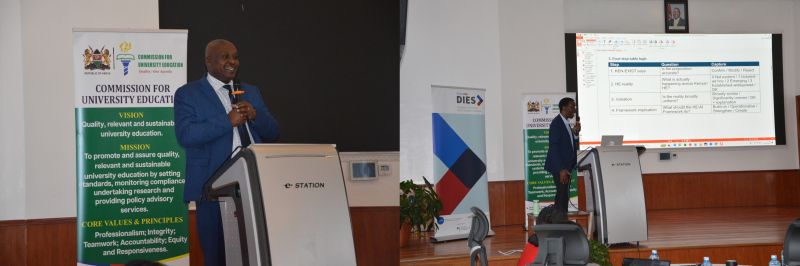
Mr. Darius Ogutu (l) and Prof. Madara Ogot (r)
AI should assist, not replace, your brain.
In his keynote speech, Professor Madara Ogot of the UbuntuNet Alliance focused on practical applications. His main message was straightforward. “Artificial intelligence should be utilized to supplement rather than replace human judgment.”
AI currently assists with research, literature searches, proposal development, data analysis, editing, information retrieval, student services, and administrative chores and clearly extends outside the classroom. The panelists examined possible applications in admissions, student support, research management, knowledge management, institutional decision-making, and public engagement. An AI-powered admissions assistant, for example, might help prospective students comprehend program criteria, determine eligibility, identify alternative schools, and navigate application procedures via conversational engagement.
However, the opportunities come with a key caveat: AI-generated data must be verified.
Artificial intelligence systems can produce inaccurate, out-of-date, or fraudulent data. Human judgment, therefore, remains essential.
As artificial intelligence becomes more common at universities, students and professors must continue to question information, think critically, make ethical decisions, and generate innovative ideas.
The goal isn’t to replace human intelligence with AI.
Its mission is to enhance human talents while keeping education human-centered.
What should Kenya’s artificial intelligence framework address?
According to the debate, a national framework for AI in higher education should address a variety of concerns. These discussions centered on ethical AI use in education, including curriculum integration and learning experiences that prepare students for an AI-enabled world. Participants also emphasized the need to reconsider assessment methodologies in order to effectively measure students’ competences, knowledge, and critical thinking in an AI-enabled environment.
Another significant topic was research and innovation, with an emphasis on AI-assisted research, research integrity, and local innovation. Setting specific standards for the disclosure, verification, and ethical use of AI-generated content in academic work is critical to maintaining academic integrity.
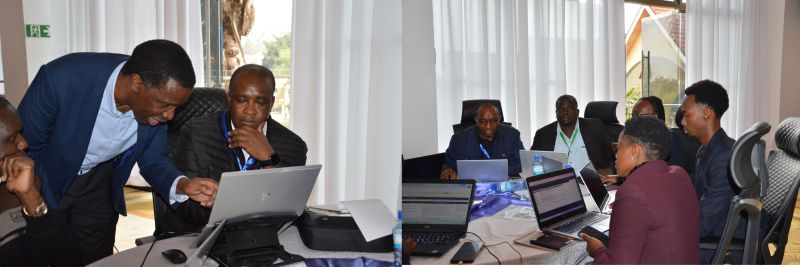
Participants emphasized equity and inclusion. As AI becomes more integrated into higher education, precautions must be taken to ensure that it does not exacerbate existing imbalances among institutions, regions, or students with varying levels of access to technology and digital resources. Sustainability will thus be critical, necessitating long-term funding, infrastructure development, and institutional support.
Beyond teaching, learning, and research, the framework will need to assess the appropriate use of AI in student services and university administration, including potential to improve institutional operations and provide AI-enabled student support.
Learning from the world, but deciding what works for Kenya
The discussion also turned abroad, analyzing AI policy experiences in Germany, Ireland, Japan, the United Kingdom, and UNESCO. However, worldwide experience does not imply mimicking other countries. The key questions posed were: What policies should Kenya adopt? What should it modify? What should be rejected, deferred, or investigated further?
The goal was to learn from worldwide experiences while establishing a strategy that reflected Kenya’s higher education system, development aspirations, and institutional realities.
Balancing opportunity and danger
The potential benefits of AI are significant. AI has the potential to improve teaching and learning, student support, research productivity, proposal creation, access to university information, creativity, institutional efficiency, and assist universities in addressing Kenya’s development concerns.
However, the risks are equally real. Participants expressed concerns about everything from inaccurate AI-generated information and academic dishonesty to data privacy violations, loss of institutional data sovereignty, unequal access, insufficient staff competencies, overreliance on foreign platforms, and AI-driven decisions without adequate human oversight.
From discourse to action
The Nairobi dialog was meant to be more than just a talk.
The proposed next steps included mapping the current state of AI adoption in Kenyan universities, conducting policy and regulatory gap analyzes, identifying minimum AI capabilities, developing AI competencies for students and staff, establishing principles for AI-enabled assessment and academic integrity, strengthening data governance, and identifying priority areas for AI research and innovation relevant to Kenya.
In the medium term, the process is expected to help construct the National AI Framework for Higher Education, implementation guidelines, institutional governance structures, capacity-building programs, and tools for tracking AI uptake.
The longer-term goal is even loftier: to position Kenyan universities as AI producers and innovators, backed by ongoing evaluation and a developing national evidence base on AI’s influence on higher education.
Shape the future before it shapes us
Perhaps the most crucial question emerging from the debate was posed by Prof. Madara Ogot. “How must we shape AI in higher education before AI shapes us?”
The three-day debate in Nairobi was critical to ensuring that Kenya actively participates in shaping its own future, rather than simply reacting to the AI revolution.